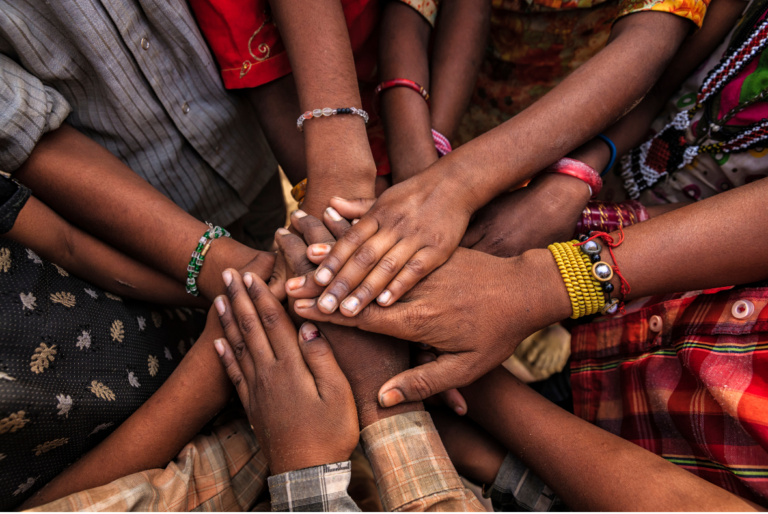
While Black students have seen a remarkable rise in university entry rates from 21.6% in 2006 to 48% in 2024, the largest increase of any ethnic group they continue to face significant barriers once they arrive.

Bridging the gap
There is a moment that many Black, African, and Afro-Caribbean young people experience somewhere in their education journey. It is the moment they look around and realise they do not see themselves anywhere. Not in the curriculum. Not among the teachers. Not in the stories they are told about who succeeds and who does not. And something quietly shifts in them.
It is not always dramatic. Sometimes it is just a slow withdrawal. A sense that this place was not quite made for them. That the path ahead is steeper than it looks for others. That ambition, however fierce, might be naive.
That moment is not inevitable. But it is common. And it is a direct result of systemic gaps that continue to shape the educational experience of Black children and young people.
The evidence is clear. Black African, Black Caribbean, and other Black pupils have seen their attainment gaps widen since 2019, falling further behind White British pupils by at least 0.8 months — among the largest increases of any ethnic group. At the 16 to 19 stage, Black Caribbean students are 1.2 grades behind their White British peers in their best three qualifications. The Education Policy InstituteThe Education Policy Institute
While Black students have seen a remarkable rise in university entry rates — from 21.6% in 2006 to 48% in 2024, the largest increase of any ethnic group; they continue to face significant barriers once they arrive.
Despite representing 6% of undergraduate admissions, Black students receive only 1.2% of funded UK research council PhD studentships. And when they graduate? Black graduates are twice as likely to be rejected for roles in financial services, professional services, and legal sectors, and it is estimated it would take 70 years to achieve proportional representation in the highest-paying sectors at the current rate of change. Minorityed
These are not individual failures. They are the result of systems that were not designed with our communities in mind and have not done nearly enough to change.
But here is what we also know. Representation works. Mentorship works. When a young person who is quietly wondering whether this is for them encounters someone who looks like them, who has walked a similar path, who has faced similar doubts and found a way through, something fundamental changes. The possible becomes visible. The path becomes real.

That is the power at the heart of Africarn's Education pillar.
We provide mentorship, training, and access to opportunities designed specifically for Black, African, and Afro-Caribbean young people and adults. Not as an add-on or an outreach initiative, but as the entire purpose. We work to ensure that everyone who comes through our programmes has not just the practical skills and knowledge they need, but the cultural affirmation, the encouragement, and the community support to back it up.
Because education is not just about qualifications, as important as those are. It is about believing that you belong in the spaces you are trying to enter. It is about having someone in your corner who genuinely understands your journey. It is about being told, in word and in action, that your potential is real and your future matters.
We are also always looking for people who want to give back by becoming mentors. If you have navigated the education system, built a career, or simply have experience and wisdom to share, your story could be exactly what a young person needs to hear right now.
To find out more about our education programmes or to register your interest in becoming a mentor, get in touch at hello@africarn.org or visit africarn.org. Every young person deserves to see themselves in their future. We are here to help make that happen.