
How an ancient African philosophy explains everything we believe about community, belonging, and what it means to truly thrive together.
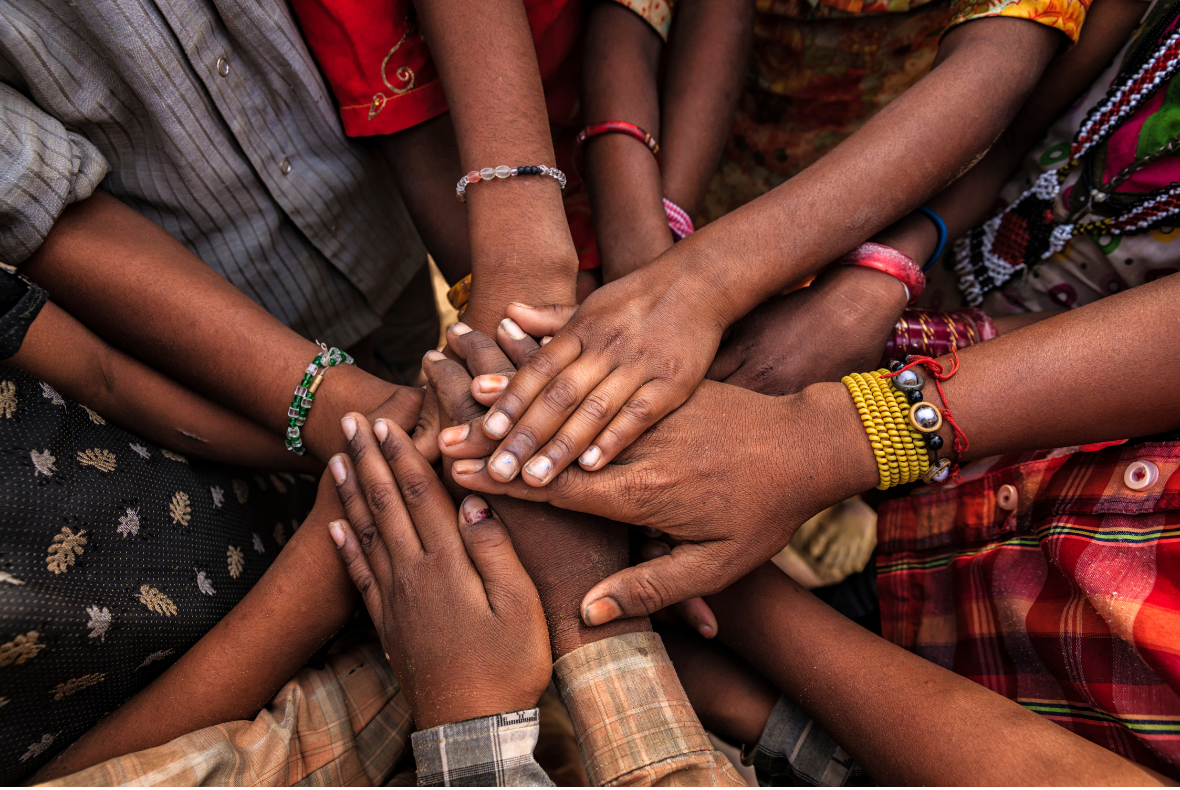
There is an old proverb at the heart of Ubuntu philosophy, one that has been passed down through generations of Bantu and Xhosa people in Southern Africa, spoken aloud long before it was ever written down:
Umuntu ngumuntu ngabantu.
"A person is a person through other persons."
In other words: I am because we are.
What Ubuntu actually means
Ubuntu is not simply a word. It is a worldview, one that recognises the deep interconnectedness of all human beings. The name itself holds the meaning: “ubu” speaks to the social nature of people, the fact that we are built for one another, while “ntu” honours the uniqueness of every individual.
Together, Ubuntu teaches us that we are not isolated individuals navigating the world alone. We are shaped by our communities, our ancestors, and the relationships we carry. Our sense of self does not come from within in isolation, it emerges through our connections with others.
"The source of knowledge is the community, not the individual. And through the community, every person finds their place and their worth."
This stands in sharp contrast to the Western philosophical tradition, which has long placed the individual at the centre. Ubuntu says something altogether different: that our humanity is not diminished by depending on one another. it is completed by it.
Why this matters for our community
For Black, African, and Afro-Caribbean people, Ubuntu is not an abstract idea. It lives in the way our grandmothers fed entire streets without being asked. In the aunties who showed up when no one else did. In the village elders whose wisdom made the meal at the table more than just food, it made it sacred.
It lives in the Caribbean tradition of “liming” — simply being together with no agenda but connection. In the African tradition of communal decision-making, where the collective voice shapes the path forward. In the diasporic networks that helped newly arrived migrants find housing, jobs, and belonging in cities that did not always welcome them.
Our communities have always understood Ubuntu, even when we didn’t call it by that name.




Ubuntu and Africarn
Africarn was built on this same foundation. The name itself a coming together of African and Caribbean is an act of Ubuntu. Two distinct communities, woven into one network. Not because our histories are identical, but because our futures are intertwined.
When we deliver mentorship, we are saying: your growth is our growth. When we advocate for policy change, we are saying: what happens to one of us affects all of us. When we create spaces for community health, education, and economic opportunity, we are honouring the Ubuntu principle that a community can only flourish when all of its members are able to.
Living Ubuntu, not just knowing it
One of the most powerful things about Ubuntu philosophy is that it cannot be understood through words alone. It must be lived. It is known through the act of showing up for a neighbour, a stranger, a young person who just needs someone to believe in them.
Ubuntu also carries a vision for healing. In traditional Ubuntu conflict resolution, the goal is never simply punishment. it is the restoration of relationship. The community gathers. There is dialogue. There is acknowledgement. And slowly, there is repair. For communities that have carried the weight of colonialism, displacement, and systemic inequality, this model of collective healing feels deeply, urgently relevant.
We do not pretend that community alone solves structural injustice. But we do believe that a strong, connected, self-aware community is the foundation from which everything else becomes possible.
An invitation
If you are reading this and you feel the pull of Ubuntu, if you recognise yourself in this philosophy, if it sounds like the values you were raised with or the kind of community you are searching for; you are already part of this.
Africarn is not a service you access. It is a community you belong to. And in the spirit of Ubuntu, we rise not by leaving others behind, but by bringing each other forward.
I am because we are. And together, we are AFRICARN!